
Cross-border e-commerce “Digital Iron Curtain” offense and defense war: who is manipulating the hidden algorithms of trillions of cargo flow?
Every 8 seconds around the world, a batch of Chinese-made Bluetooth headphones are sent to Los Angeles via cross-border e-commerce, but the 400 boxes of wigs backlogged in Polish customs have not been cleared so far. Such magical scenarios play out every day in cross-border trade – when the physical displacement of goods encounters geographic separation, more sophisticated digital neurons are needed to accomplish global synergy.
World War in an ERP machine

Shenzhen In a cross-border e-commerce operation center in Bantian, real-time transaction data from 187 countries pulsate on thirty LCD screens. The company, which handles 100,000 orders a day, had lost a million dollars in profit in a single month due to exchange rate fluctuations, until they reconstructed their ERP decision tree. The system automatically switched to GBP settlement the moment the euro exchange rate fell below 7.6, while freezing the replenishment order in the German warehouse, and the whole process did not take more than 700 milliseconds.
This is not a sci-fi movie sequence, but a routine operation of modern cross-border ERP. The real battlefield is hidden in the multilingual order auto-routing algorithm, in the dynamic GATT parsing engine, and in the adaptive inventory allocation model based on the logistics congestion index. Amazon’s VP of Global Store Operations revealed that their ERP system handles more than 200 currency exchange relationships per day and can anticipate new certificate of origin formats that Vietnam Customs may suddenly require.
Six Superweapons in the Algorithmic Arsenal
- Semantic Sandbox: A header ERP system automatically recognized a Korean consumer’s "looks a little subtle" comment as a return warning, and this NLP model based on East Asian linguistic properties reduced the return rate by 37%.
- Tariff Fog Penetrator: In the face of the RCEP agreement rules that can change at any time, the smart contract automatically generates commercial invoices that comply with Indonesia’s customs requirements and avoids the sudden increase in Bangladesh’s special tax on textiles.
- Logistics Black Hole Detector: Integrate global port strike data, hurricane path prediction and trucker strike risk index to divert cargo to Rotterdam port 72 hours in advance.
- Money Undercurrent Navigator: On the eve of the Turkish lira crash, the system automatically converts cargo payments into offshore RMB and completes the settlement through Hong Kong offshore accounts.
- Cultural Taboo Firewall: The Middle East version of ERP automatically filters religiously sensitive patterns, and the North American module enables LGBTQ+ friendly merchandise labeling algorithms.
- Crisis Escape Pod: When a country suddenly announces import restrictions, reverse logistics algorithms enable global inventory redistribution within 48 hours.
Laws of Construction of the Digital Tower of Babel
A cross-border e-commerce company in Shanghai that specializes in the Latin American market needs its ERP system to be compatible with Mexico’s IEPS tax system, Brazil’s ICMS turnover tax and Argentina’s import pre-declaration system at the same time. They chose to deploy the entire tax module on a quantum computing architecture, which compressed the real-time tax calculation response speed to 80 milliseconds. And a Hangzhou apparel cross-border enterprise is even more extreme – their ERP mirrors the U.S. state excise tax change logs and is able to automatically generate QR codes for price tags that comply with the latest Arkansas regulations.
But that’s just the base layer. The real masters are training AI to learn the paperwork preferences of Indian customs officials: the Tamil Nadu Customs requires 17 more details in the format of pro forma invoices than the central regulations, and this tacit knowledge, hidden in tens of thousands of clearance documents, is gradually being deciphered by machines.
The next battlefield: a downgraded blow for spatial computing
While the industry is still fretting over customs data in a two-dimensional world, engineers at a lab in New York have begun testing a fourth-generation ERP with spatial computing capabilities. this system can map augmented-reality makeup-testing data from a European customer to 3D modeling of a flexible production line in Dongguan in real time, and synchronously adjust the robotic gripping paths at a Malaysian sorting center. Amazon’s secret weapon, on the other hand, is a logistics scheduling algorithm that predicts delays in Elon Musk’s star-chain network – after all, popping an order for winter winter clothing in the Arctic Circle requires the seamless collaboration of satellite internet and dog sleds.
In this war without smoke, the global drift trajectory of each package is a carefully calculated cosmic voyage. Don’t be surprised when the Chilean Cheerios you receive one day maintains just the right 17.6°C core temperature – it’s probably the technological romance that some ERP system has reserved for you after traversing 12 time zones, overcoming seven tax regimes and three logistics standards.

AI revolution: when software development enters the age of “autopilot”
In the office of a technology company in Munich, Anna, a project manager, is staring at the dense Gantt chart on the screen. Two months ago, her team took on an urgent project to develop a logistics management system, but now they’re stuck in a quagmire of changing requirements. When she tried to use AI tools to analyze user feedback data, the automatically generated flowchart perfectly matched the customer’s latest customs clearance module – a task that once required 20 man-days of work, but now requires only three mouse clicks.This is not a sci-fi scenario. three years after the code-completion revolution triggered by GitHub Copilot, AI is rewriting the underlying logic of software development in a more insidious and profound way. McKinsey’s latest research shows that developers using generative AI complete tasks 45% faster on average, and Gartner predicts that by 2027, half of the world’s software engineers will be using AI programming tools on a regular basis. This quiet technological revolution is reshaping the boundaries of human-machine collaboration.
Liberated ‘programmers’
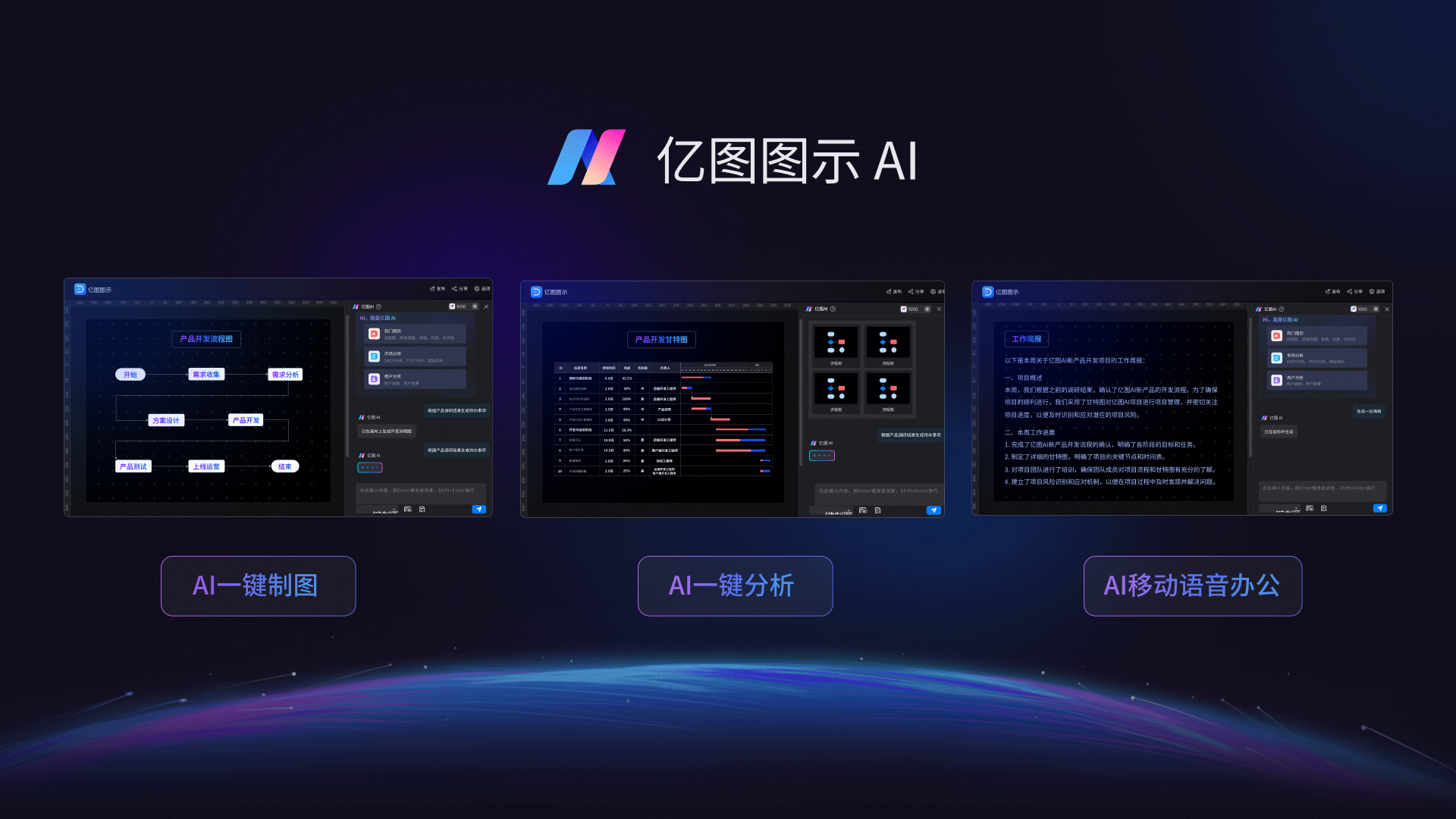
Late-night Silicon Valley In his apartment, Mark, a full-stack engineer, pressed the AI assistant button in his IDE out of habit. He was surprised to find that this “digital coworker”, who was still working at 2:00 a.m., could not only automatically fix the recursive function he had just written incorrectly, but even thoughtfully reminded him with a comment: “Here you can call the cache module you developed last week”.
That’s exactly what another coworker had done three days earlier when he updated his codebase.
There’s a three-minute curse in software development: every three minutes that a developer writes code, he or she is forced to interrupt to look for information or fix a bug, a curse that has plagued the industry for two decades. 88% felt significant process acceleration and 74% were able to focus on creative work.
This change comes from AI’s triple empowerment of the development process: navigational knowledge, microscopic real-time error correction, and, most excitingly for practitioners, “generative creation”. When the developer enters “build OAuth 2.0 authentication module”, modern AI not only completes the code snippet, but also generates test cases and security assessment reports simultaneously. This all-round intelligent assistance makes a well-known e-commerce platform’s backend system upgrade cycle from three months to six weeks.
Intelligent light that penetrates the lifecycle

When the CTO Tao Zhang first saw an AI-generated system architecture diagram at a digital transformation conference at a bank in Shanghai, he realized that the traditional software development lifecycle (SDLC) model was collapsing. This architecture diagram, drawn by AI, not only accurately predicted the user growth curve for the next three quarters, but also red-flagged areas of possible database bottlenecks – all based on deep learning of historical work orders, user behavior, and operations and maintenance logs.
Artificial intelligence has transformed the SDLC in ways far more profound than code generation:
- Requirements analysis phase: AI can parse 100,000 pieces of user feedback to automatically generate a feature prioritization matrix
- Testing session: A multinational company utilizes AI to generate targeted test cases, increasing regression test coverage to 98%
- System Maintenance: Ops AI can predict server downtime risk up to 35 minutes in advance by analyzing log patterns
More revolutionary changes are happening at the team collaboration level. In an automotive software team in Berlin, after the product manager describes the functional requirements in natural language, the AI instantly generates a user story map, a draft data model, and an API documentation framework. This direct connection from idea to prototype makes cross-departmental communication 200% more efficient.
Boundary Exploration of Human-Machine Collaboration
.
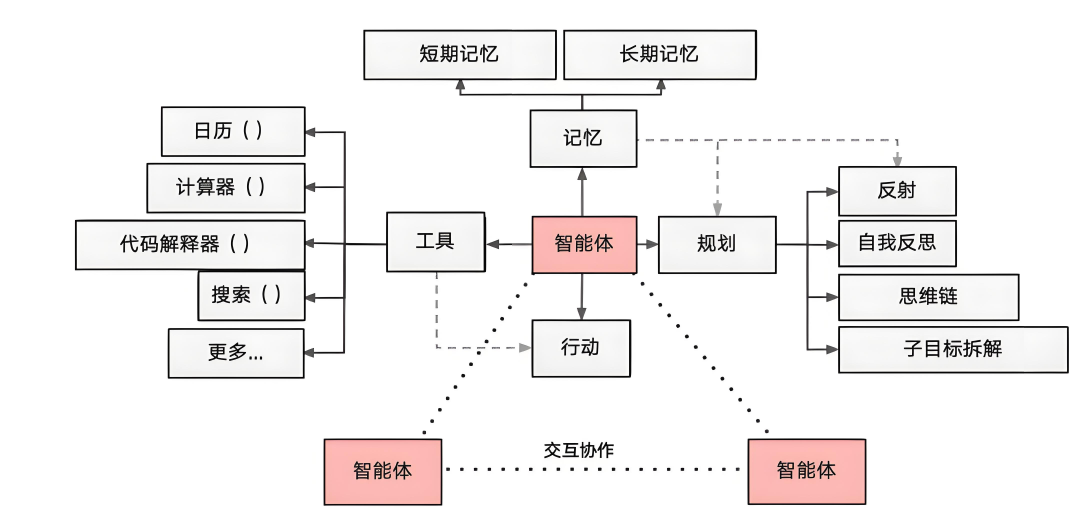
An intriguing poster hangs on the wall of an AI lab in Tokyo: the silhouettes of a human developer and an AI assistant stand side-by-side, and underneath it reads, “Our competitors aren’t the AIs, they’re our peers that don’t use AI.” This realization is spreading in tech circles around the world, with GitHub statistics showing that developers using AI tools are committing code 35 percent more often, while code review pass rates have risen by 12 percentage points.
But the real change is happening at a deeper level:
This evolution is reshaping the economic model of the software industry. When a North American cloud provider integrated AI into the full DevOps process, its customers’ median time-to-market was reduced from 9 weeks to 4 weeks, while post-maintenance costs were reduced by 40%.
Standing at the Crossroads of Intelligent Transformation

While the industry is still debating the copyright of AI-generated code, the frontrunners are already exploring even more cutting-edge areas: using AI to predict the distribution of technical debt, automatically generating architectural roadmaps for evolution, and even training “digital product managers” who can understand business strategy. Gartner’s warning is becoming reality – organizations that limit AI to coding are missing out on the huge dividends of full lifecycle intelligence.
Perhaps the most philosophical takeaway from this change is that as AI takes over the “what” of software development, human engineers are able to focus on the “why” of strategy. Just as self-driving cars free up the hands of drivers, AI-assisted development is unleashing the upper limits of human creativity.
At a makerspace in Shenzhen, a young developer named Xiaolin looked at an AI-generated IoT system architecture and suddenly came up with an even bolder idea. At the moment, the duet of his keyboard tapping and the beeps of AI suggestions is just like the most moving technological concerto of this era.