
AI customer service comprehensively on the throne: unveiling the efficiency revolution and invisible costs of enterprise service
I, is disappearing “turn manual” button
“Please describe your problem, we have moved to an intelligent customer service system conversation.” This is the service tone with the highest user complaint rate in the third quarter of 2024 Telecom Service Quality Circular. In the Beijing Byte Technology Park, Zhang Lei, director of operations, showed a set of data to the reporter: after deploying AI customer service, the number of their manual service requests dropped by 62%, but customer satisfaction increased by 23 percentage points.
This seemingly contradictory business phenomenon is happening in 85% of China’s regulated enterprises. According to the latest disclosure of the Ministry of Industry and Information Technology’s “Report on the Development of Intelligent Service Industrialization”, the market penetration rate of AI customer service has exceeded 79%, and the market scale has formed a ten-trillion-dollar service track.
II. Anatomy of AI customer service “superpower”
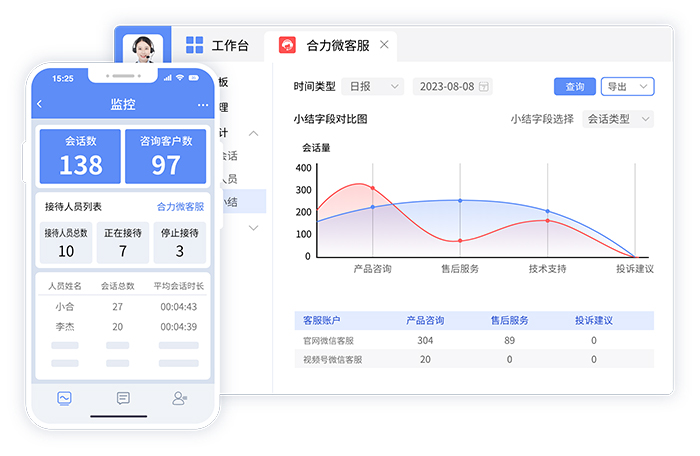
1. Data Nerve Center: 3,000 Conversation Units per Second
Order inquiries that take an ordinary operator three minutes to process are compressed to 0.17 seconds in the AI system of a Shenzhen-based electrical appliance brand. This intelligent hub can simultaneously dock the official website, APP, small programs and other 18 entrances, and optimize the response strategy in real time through 6 million sets of dialogue models.
2. Algorithmic Decision Maze: 94 more strain paths than humans
When the consumer throws out "Receive wallbreaker leakage how to do" questions, AI is not a simple transfer to the after-sales, but automatically start the decision tree: first call the purchase record to verify the warranty period, according to the user uploaded video of the failure to match the database of 70,000 solutions, and finally give the composite of the "video guide repair + compensation of 100 yuan coupon". program.
3. Cost Black Hole Penetrator: Turning Conversations into Financial StatementsThe financial report of a fresh food e-commerce company in Hangzhou shows that the introduction of AI customer service saves labor costs of 2.83 million yuan in a single quarter, but brings 46% cross-selling growth. The secret lies in the system’s ability to automatically mark the business value of each conversation: transforming return applications into new product recommendations, and turning complaint work orders into demand mining sites.
III. The “Achilles’ heel” of efficiency bots
1. A frozen smile: the ever-standard 10-second response rate
In a control group test at the User Experience Lab, visitors rated AI customer service 48 points lower on empathy than humans. A typical scenario: when a user is emotionally agitated by a logistics delay, the system is still repeating the standard response of "please provide order number" for the 3rd time.
2. Semantic maze predicament: 13% of questions need manual rescue

A bank tech team in a code repository found that 5,400 conversations per day needed to be forced to bounce out of the AI system. These problems are concentrated in financial disputes, contract interpretation and other compliance scenarios, when overconfident algorithms can instead become a source of legal risk.
3. The “Berlin Wall” of training data: trade secrets and privacy paradox
A leading manufacturing company in Dongguan had to invest an additional 4 million RMB to build a data wall because of its use of AI customer service. Their Hong Kong and Macau customer base refused to reveal details of product defects in conversations, fearing that sensitive information would be written into permanent memory models.
IV, the threefold progression path of the service revolution
1. Hybrid Augmentation Model: Making Humans the Last Firewall
A simulation experiment at Beijing University of Posts and Telecommunications proved that setting the initial response of AI to automatic, and automatically transferring complex problems to a two-way channel of human, can reduce the risk of customer complaints by 73%. A government hotline’s approach is worth learning from: 3,000 basic knowledge questions and answers are fully automated, but in-depth services such as legal aid retain a dedicated manual line.
2. emotion computing upgrade: temperature calibration algorithm matrix
The emotion perception model developed by the Shenzhen Institute of Advanced Technology enables the system to recognize seven core emotions, such as anxiety and disappointment of users, through 246 voiceprint parameters and 2,639 combinations of speech. During the trial run of the senior care service platform, the trust of empty-nesters in the smart talkers increased by 61%.
3. Dynamic credit system: voiceprint payment to crack the trust problem
Hangzhou Internet Court’s first AI customer service dispute case shows that the equivalent signature voiceprint authentication technology can effectively avoid service disputes. When the user says "I confirm the above mediation program", the system automatically deposits the voiceprint feature code into the judicial blockchain, providing a new fulcrum for the electronic evidence chain.
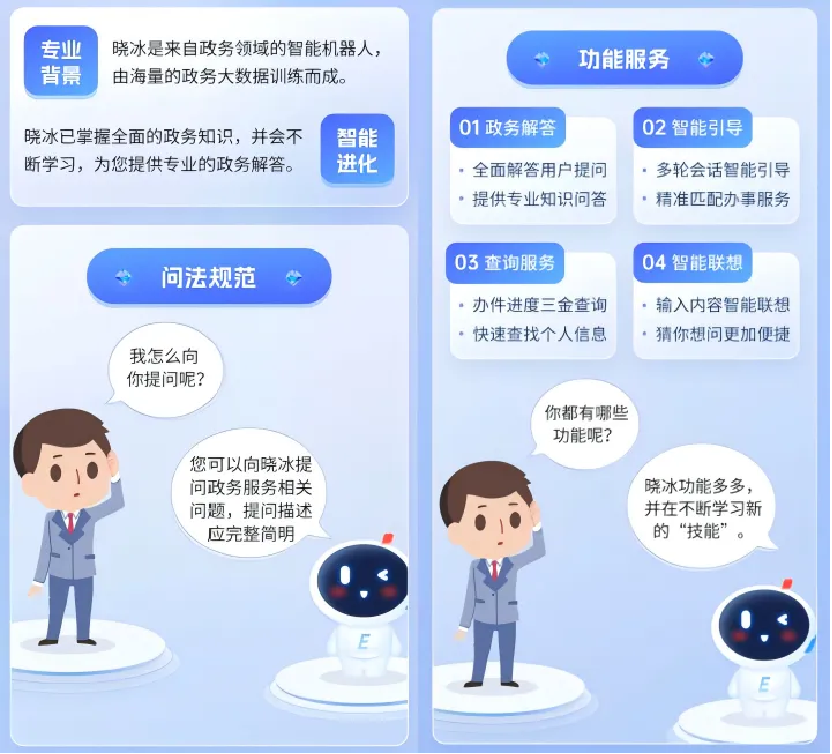
This silent service revolution is reconfiguring the ground rules of the business world. When the marginal cost of technology to solve the basic service tends to zero, the battlefield of the enterprise competition will no longer be “whether to use AI customer service”, but in the intelligent service chain, how to retain the human nature of the flash temperature. Perhaps as the head of the Alibaba Dharmo Academy project said: "The future of the gold customer service, both super programmers, but also the Chief Emotional Officer. "