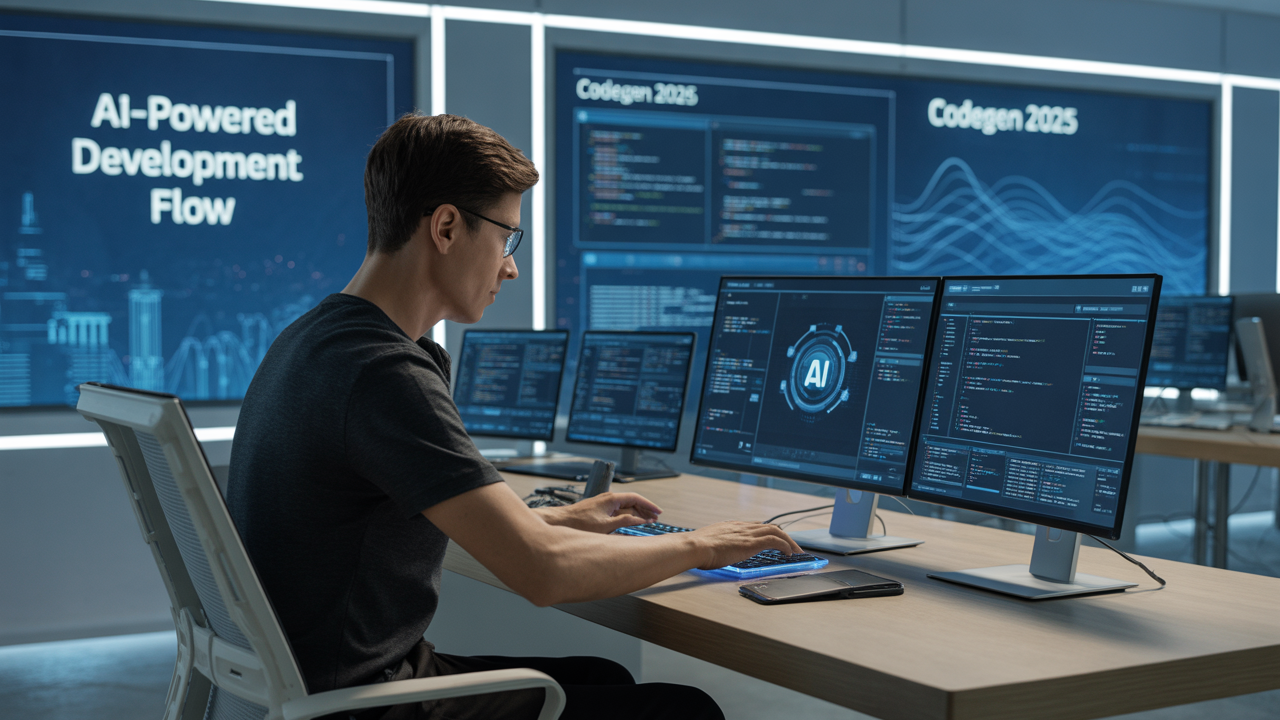

Programmers to lose their jobs? ai is rewriting the rules of software development
Three years ago, when programmers first saw AI-generated code suggestions in their IDEs, they thought it was nothing more than a tech orgy. Who would have thought that in 2024, GitHub statistics show that programmers using Copilot to complete tasks 45% faster, 94% of developers in the work of frequent calls to AI assistants – this string of figures unveiled a brutal truth: programmers who do not know how to use AI, is becoming the digital era of the & quot;Handyman".
one, when AI began to take over the keyboard
Three o’clock in the morning in the office building, the programmer Li wanted to delete the automatically generated code segment for the thirteenth time. This classic overtime scene is gradually disappearing in the development environment embedded in AI. New research from McKinsey confirms that generative AI allows developers to save 45% of their coding time, and 88% of programmers in a GitHub survey reported significantly shorter project delivery cycles.

In a major Internet factory in Hangzhou, development team leader Wang Peng has calculated an account: after the team introduced the AI development assistant, the average working hours per requirement was compressed from 12.3 hours to 6.8 hours. More critically, 72% of programmers feedback job satisfaction increased – AI is not only grabbing time, but also reconfiguring the value chain of the developer’s work.
1. Intelligent guidance: a hundred thousand reasons in IDE
A tech forum poll showed that programmers spend 17% of their day searching for technical documents. This time loss is compressed to less than 3% when the AI assistant is transformed into a 24/7 advisor to answer queries directly in the coding interface. Microsoft Research observed that new developers using AI guidance can reach the level of three months in the traditional training model in just two weeks.
2. Real-time error correction: the code reviewer that never gets tired
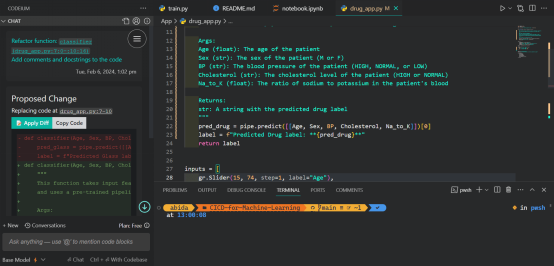
At a hackathon in Shenzhen, the participating team captured 97% of syntax errors and 82% of logic holes with the help of AI. The CTO of a fintech company confessed: "The AI review found concurrency issues that even our architects hadn’t noticed. " GitLab data confirms: access to AI’s codebase, the production environment incident rate dropped by 63%.
3. Batch Generation: A Switch to Unleash Creativity
When a startup team in Hangzhou used AI to generate 80% of the scaffolding code, the founders realized that the engineers were starting to focus their fire on the core algorithms. This corroborated GitHub’s finding that after AI took over the repetitive labor, the percentage of programmers’ time devoted to innovative work jumped from 28% to 65%, and patent output surged 142% year-over-year.
II, beyond the code of industrial change
In the software park in Zhangjiang, Shanghai, AI transformed not only the code production line. The production line of a head ERP vendor shows that: in the demand analysis stage, AI-generated flowcharts allow customers to confirm the speed of three times; in the testing session, the use cases automatically designed by machine learning cover 94% of the abnormal scenarios; in operation and maintenance, AI predictive maintenance shortens the system downtime by 82%.
1. Project management: a digital commander who can tell fortunes
After a multinational team used AI to analyze data from 200 past projects, project delays were crushed from 37% to 9%. Even more amazingly, the system predicted 35 days in advance that a module might become a bottleneck, giving the team a critical window to make adjustments.
2. DevOps revolution: The invisible driver of the deployment pipeline
ByteDance’s engineering team revealed that the AI-optimized CI/CD pipeline speeds up release times from once a week to three times a day. In an e-commerce platform’s "Double Eleven" preparations, AI dynamically provisioned cloud resources to harden the 300% year-on-year traffic flood.
3. Business Decision Making: The Economics Hidden in Code
A SaaS company in Silicon Valley used AI to generate a business plan and saw a 58% increase in investor pass rate. A more subtle change occurs at the decision-making level: when AI parses 100,000+ user behavior data in real time, the adjustment cycle of the product roadmap is shortened from quarterly to weekly.
III, the programmer’s new law of survival
Beijing Zhongguancun circulated a new paragraph: programmers who will use AI are optimizing algorithms, and those who will not use it are fixing the blessing of the newspaper.Gartner’s prediction shows that by 2027, half of the engineers will rely on AI coding tools. A headhunter’s data is even more blunt: in Q1 2024, job seekers with AI co-development skills have a 41% salary premium.
But the real contest is not only at the coding level. Tencent Research Institute observed that top developers are starting to cultivate three new capabilities: "product thinking" to accurately describe requirements in natural language, "trainer skills" to tune AI to generate high-quality code, and "architectural olfaction" to anticipate system-level risks.
When the technical director of a game company in Shenzhen tried to use AI to generate a full set of technical documents, he found that a job that originally required 10 man-days could now be completed in 3 hours for the first draft. This detail reveals a deeper industry pulse: software development is shifting from labor-intensive, to intelligence-intensive.
Standing at the turning point of 2024, every developer faces a soul-searching question: should they continue to be "skilled laborers" on the code assembly line, or should they transition to become "architecture commanders" in the age of AI? The answer may be hidden in a quote from GitLab’s latest whitepaper: "In the next ten years, developers who can master AI will not be replacing others, but defining new boundaries of possibility. "