
Programmer collective unemployment countdown: ai is blood washing the whole chain of software development
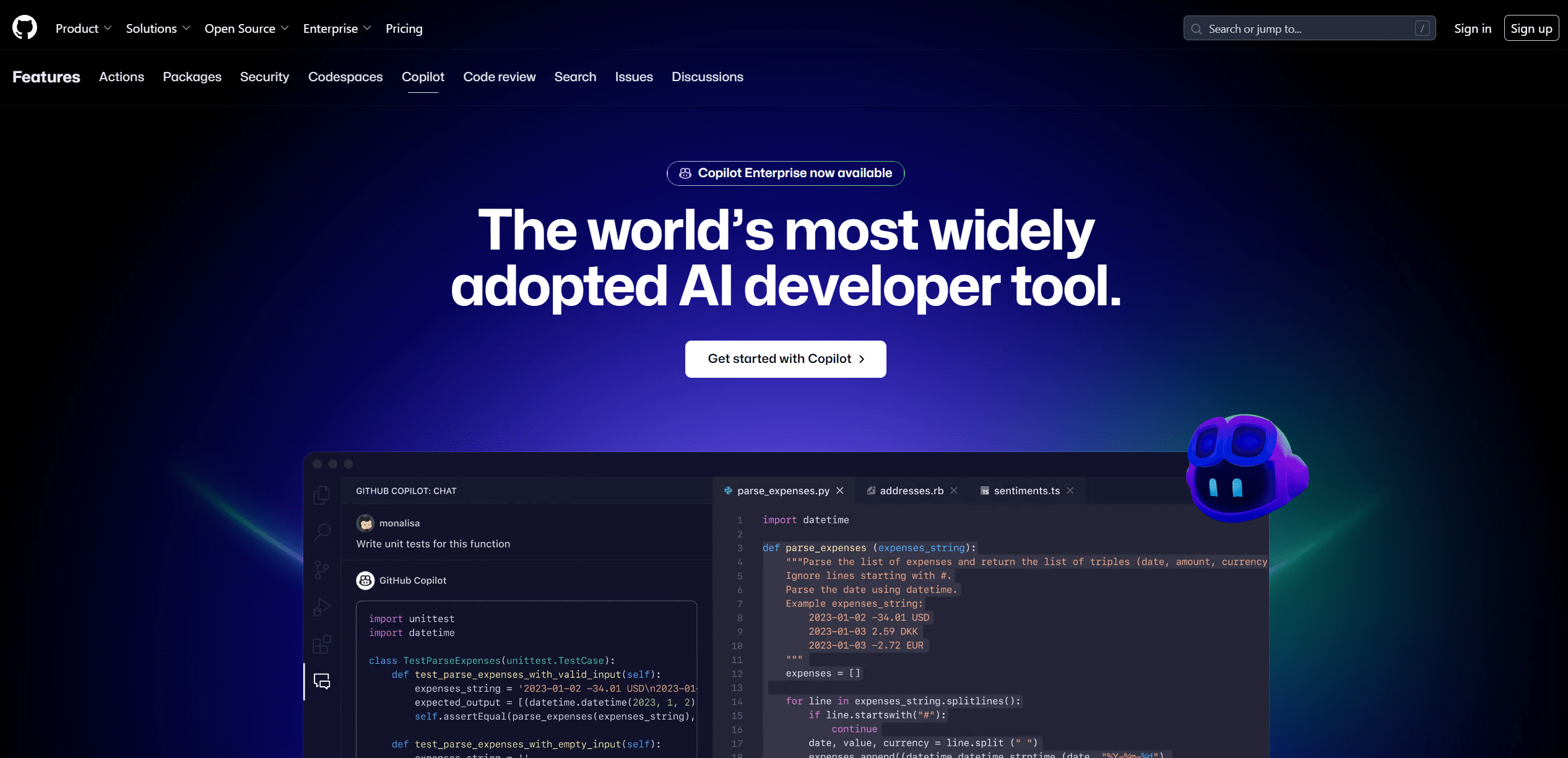
When GitHub Copilot came out in 2021, Silicon Valley engineers showed screenshots of the auto-complete code on social media platforms, and the comment section was full of banter and questions. Three short years later, more than 2 million developers have taken the initiative to invite AI assistants into their IDEs, and 88% of users admit that the speed of project completion has skyrocketed.
This change is much more than just ‘writing code faster’.
The traditional development model is experiencing a ‘downgrade hit’
A decade ago, programmers were debating the merits of agile development versus waterfall models. Today, AI is directly rewriting the rules of the game for the entire software development lifecycle (SDLC.) Gartner’s latest technology maturity curve shows that half of the world’s software engineers will be using AI tools on a regular basis in 2027, and that the companies that are ahead of the curve now have already developed a generational advantage.
In a Boston fintech company, AI product manager Mary is experiencing the most magical workday of her career. In the morning, AI is used to generate a user story map, at noon to watch the interaction prototypes automatically generated by the system, and in the afternoon to check the project scheduling table optimized by AI based on historical data. When 87% of the code submitted by the development team was generated by AI, she suddenly realized that the traditional linear process of “Requirements-Development-Testing” was disintegrating.
Three Pivot Points of the Intelligence Revolution Are Reconfiguring the Industry
The first domino falls on the novice training segment. Stanford University did a controlled experiment with 36 computer science students, and the group exposed to AI mentoring scored 42% higher in code normality and 3.8 times more efficient in debugging. The technical director of a head Internet company revealed: “The freshman training cycle was compressed from 12 months to 3 months, provided that Prompt engineering is mastered.”
The second shock wave occurred in the quality defense. Silicon Valley unicorn Datadog’s monitoring system shows that AI not only catches syntax errors in real time, but also predicts hidden logic holes that could trigger an avalanche effect. When the coverage rate of automatic test case generation exceeded 92%, QA engineers began to collectively transform into ‘AI trainers’.The deadliest changes spread through the value creation layer. The traditional development team needs 2 weeks to complete the module, AI generation + manual verification mode takes only 72 hours. An e-commerce platform rewrites its recommendation algorithm with AI, not only saving 800 people/day workload, but also increasing the CTR indicator by 5.3 percentage points.
The five deadly intersections of full-link intelligence
In the demand analysis stage, AI’s ability to predict feature priorities through user behavior data has surpassed that of human product managers. A social APP disclosed that the retention rate prediction model established by AI has an accuracy rate of 89%, beating the 72% empirical judgment of senior PMs.
When DevOps meets machine learning, the frequency of deployment shows exponential growth. An Amazon AWS customer case shows that an AI-optimized CI/CD pipeline compresses version release time from 3 days to 7 hours, and improves resource scheduling efficiency by 40%.
The most disconcerting changes occur during maintenance periods.Google Cloud Platform customers with AI anomaly detection systems have seen a 78% drop in MTTR (mean time to repair). When the system can autonomously analyze logs and locate the root cause of failures, the value of the traditional operations and maintenance post is in jeopardy.
The dark battle for developer survival
The grim data from the GitHub research is staring us in the face: engineers skilled in using AI tools are 63% more satisfied with their tasks than their peers, and are contacted by headhunters 2.4 times more often. Conversely, programmers who stubbornly code by hand have fallen 31% behind AI-assisted developers in the rate at which their PRs are merged.
A technology executive at an international bank put it bluntly, “Within three years, developers who can’t work with AI will be as obsolete as practitioners who can’t use IDEs.” The head of Microsoft’s Azure AI product line put it more bluntly: “The golden ratio for future development teams is 1 architect + 3 AI prompt engineers.”
But crisis often coexists with opportunity. The team that masters the whole chain of AI tools has become an industry benchmark for increasing the speed of product delivery by 3-5 times. The digitalization department of a new energy car company, through the AI reconstruction of the development process, completed the original plan of two years of car system replacement in six months.Two Watersheds for the Future
There is no buffer zone in the age of intelligence. Enterprises that take the lead in building an AI-enhanced development system are forming a ‘data flywheel’ effect: the more project practice feeds the AI model, the more accurate the advice given by the system, which in turn accelerates the landing of more projects. Once this positive cycle is formed, it is extremely difficult for the later to catch up.
The more insidious front is unfolding in the cognitive dimension. When AI takes over 80% of the repetitive labor, the core competitiveness of developers shifts to the level of business abstraction ability, cross-domain integration thinking, and ethical judgment. In the words of Tim, a Silicon Valley technology philosopher, “The programming language of the future is not Python or Java, but the ability to describe the rules of how the world works to AI in natural language.” There are no bystanders to this transformation. three years after the introduction of GitHub Copilot, the percentage of AI-generated content in the global codebase has surpassed 23%, and is expected to cross the 50% tipping point in 2025. The options for developers are incredibly clear: either become a surfer harnessing AI, or become a spectator drowned by the wave of automation.