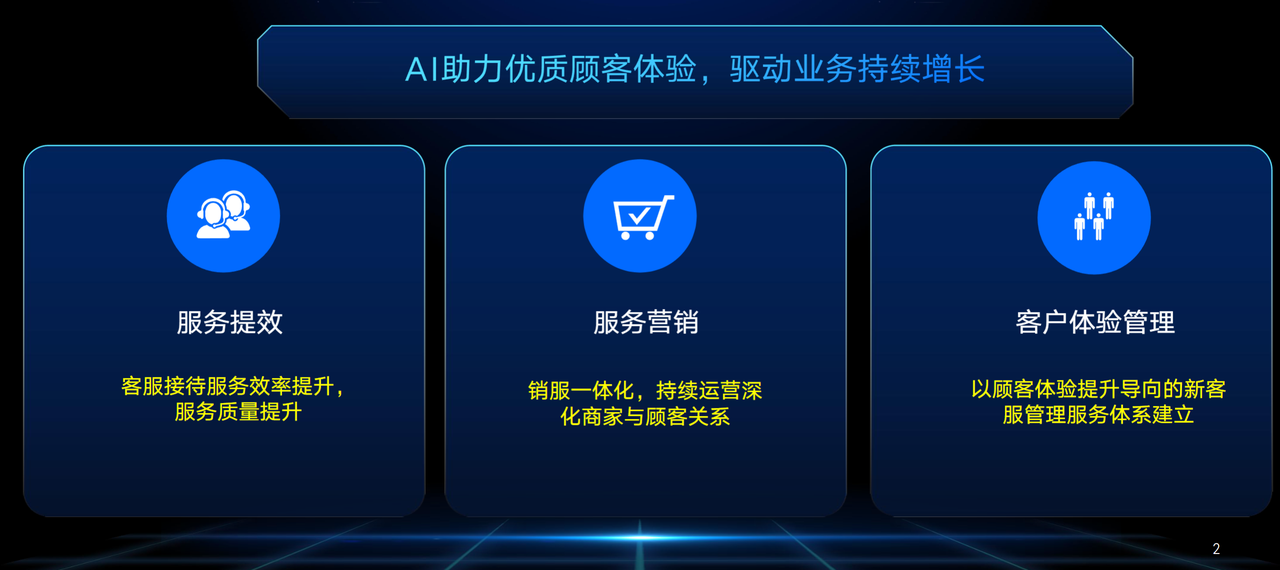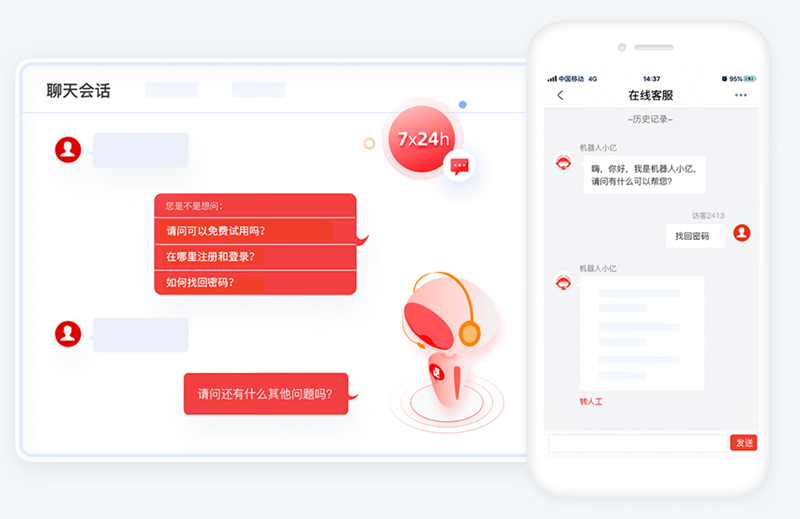

AI customer service quietly set off an efficiency revolution: your business is still using traditional customer service?
Nine o’clock in the morning, just opened the door of the shopping mall customer service center lined up a long queue. Ms. Wang angrily hung up the phone after hearing the voice prompt “the current artificial seat all busy” for the 17th time. Such a scene is accelerating the elimination – when the 95 consumers began to get used to the “second response”, AI customer service has quietly completed the evolution from mechanical answering to intelligent housekeeper.
I. Read the heart of the wisdom of the center: ai customer service of the three core leap
1. Multi-modal perception system: let the machine learn to “look at the words”
The latest generation of AI customer service is equipped with an emotional computing engine, which can analyze the customer’s emotional value through the tone of voice. When a customer says ‘no problem’, the system will recognize whether the statement is a genuine endorsement or a subtext of suppressed anger. A bank real test data shows that this emotional recognition accuracy has reached 87%, 13 percentage points higher than the judgment of manual customer service.
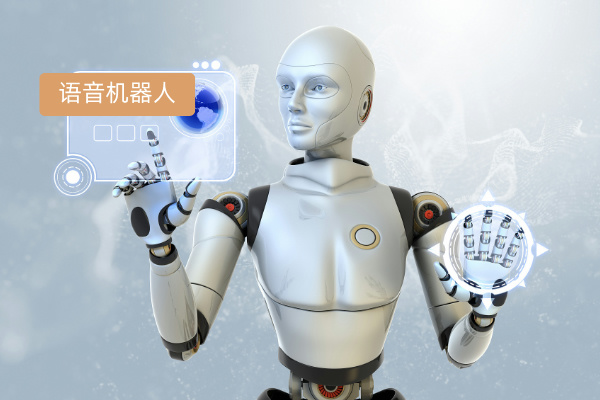
2 . Dynamic decision matrix: beyond the preset rules of intelligent evolution
Unlike traditional customer service mechanical set of words, AI customer service has established a three-tier decision-making model: the basic rule base to deal with common problems, the neural network to analyze the history of similar cases, and the reinforcement learning module to optimize the response strategy in real time. During the promotion period of an e-commerce company, AI customer service automatically opens the compensation channel for the consulting of “urging shipment”, and compresses the time limit of customer complaint processing to 2.7 minutes.
3. Full-link data stewardship: from answering terminal to decision-making hub
When you consult the product parameters on the e-commerce platform, AI customer service is synchronizing to complete three things: recording your browsing track, updating the user profile, and triggering the inventory warning of the warehousing system. This ‘decision-making-while-serving’ capability allowed a 3C brand to reduce its return rate by 29% in the 618 promotion.
Second, the cost reduction and efficiency of the digital code: enterprises must know the four core values
.
1. Cost structure reconstruction: from labor-intensive to computing power-driven
A multinational logistics enterprise introduced AI customer service, the cost of a single service from 3.6 U.S. dollars to 0.17 U.S. dollars. What’s more amazing is that during the night service hours, AI can handle 8000+ sessions at the same time, equivalent to the workload of a 200-person customer service team.
2. Service radius breakthrough: 24/7 global coverage
Supporting real-time translation of 87 languages, AI customer service not only breaks through the time zone restriction, but also through the deep learning of dialect characteristics, and obtains 92% satisfaction among the silver-haired user group of a tea company in Fujian.
3. Risk Prevention and Control Upgrade: Compliance Guardian with Second Response
With the help of sensitive word filtering and voice verification technology, AI customer service intercepted 83% of fraud attempts on a financial platform. Even more valuable, it automatically generates risk reports, helping the legal department increase compliance review efficiency by 4x.
4. Business insight regeneration: service data becomes a rich mine of precision marketing
A mother and baby brand found that “portable disinfection” became a new buzzword by analyzing 2.3 million records of inquiries. the AI system immediately linked to the R&D department, and the folding disinfectant box launched three months later set a record of 50,000 pieces sold out in a single day.
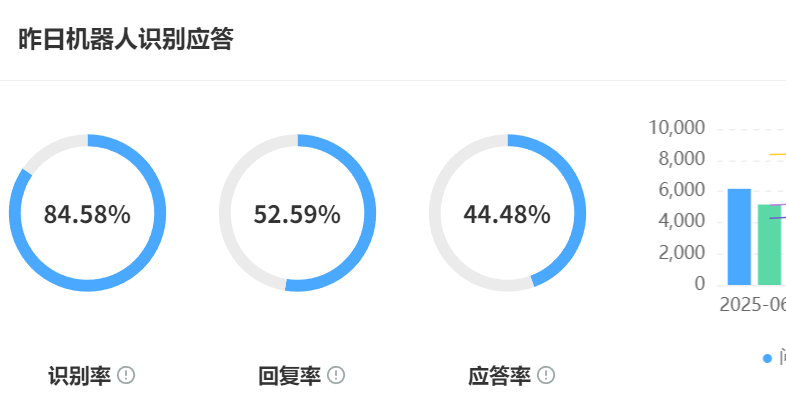
Three, practical evolution guide: three steps to build intelligent service system
Step 1: Demand Diagnosis – Identify Intelligent Entry Points
- High-frequency repetitive questions account for more than 40%? Prioritize the deployment of basic Q&A bots Customer complaint processing cycle longer than the industry standard? Introduce an intelligent work order assignment system Nighttime consulting turnover rate of more than 25%? Launch 7×24 hour duty mode Step 2: System Selection – Match the Technology Solution to the Growth Stage of Your Organization
- Startups: choose an out-of-the-box SaaS platform and keep the monthly fee within $2000 Waist enterprise: customized NLP model + CRM integration, return on investment cycle is controlled in 8 months
- Group enterprises: build a privately deployed AI middleware to achieve omni-channel data coherence
A certain airline creatively transformed its manual customer service into an AI trainer, so that senior seats can focus on handling complex customer complaints. This model of “AI handling 80% of basic problems + manual attacking 20% of difficult problems” has caused its NPS value to soar by 28 points.
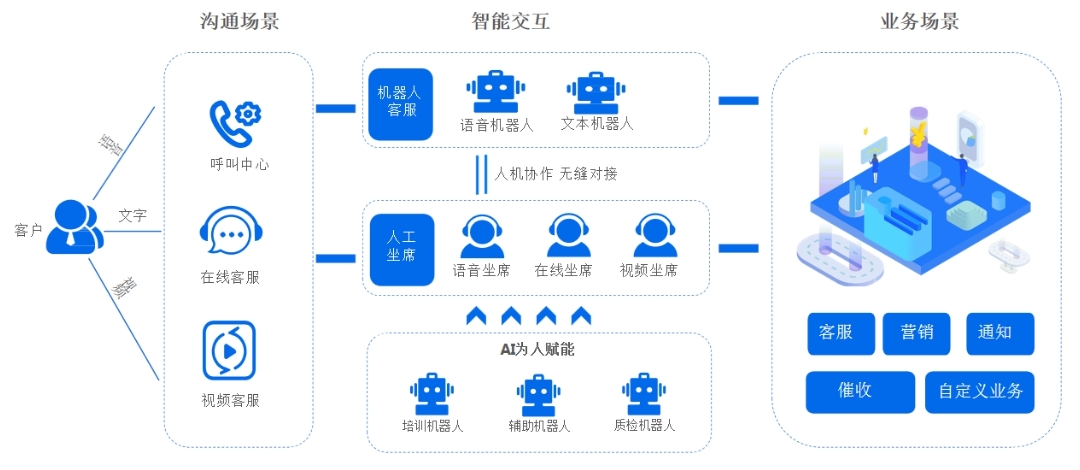 < br>While traditional customer service is still struggling in the cycle of “Hello, how can I help you?”, intelligent customer service has evolved the three-dimensional service capabilities of predicting demand, proactive care, and intelligent marketing. The practice of a retail giant has shown that stores accessing AI customer service have seen a 36% increase in the repurchase rate of members and a 55% increase in customer lifecycle value. This efficiency revolution that is happening silently is reconfiguring the law of service in the business world – not machines replacing humans, but making every service touchpoint a starting point for value creation.