
AI customer service “trapped” in the user, why artificial customer service has become a sought-after talent?
Have you ever experienced such a crazy moment?Continuously clicking on the “switch to human” button 14 times to no avail, and AI customer service is stuck in a “repeater-type dialog”, or in the three-dimensional context of the robot customer service hard tone irritated – – When we try to dial the logistics hotline, we will not be able to get through to the customer, but we will be able to get through to the customer. When we try to dial the logistics hotline, e-commerce platform or bank customer service, artificial intelligence to create new barriers, is destroying people’s expectations of efficient service.
The Ministry of Industry and Information Technology’s complaint data for three consecutive quarters shows that Internet users’ anger toward customer service channels continues to rank second highest. What’s intriguing is that in the era of AI customer service, Guangzhou, Liaoning, Hebei and other places have included “customer service administrator” in the shortage occupation catalog. Behind this contradiction lies a deep logic that cannot be avoided in the wave of digital intellectualization.
A virtual green light is illuminating corporate earnings. According to a head of e-commerce industry insiders, the deployment of a set of mature AI customer service system, a single day can handle the consultation volume increased by 500%, labor costs plummeted by 70%. Prof. Liang Kongming, an artificial intelligence scholar at Beijing University of Posts and Telecommunications, pointed out that the current AI customer service has a three-stage architecture of “target splitting-information capture-task execution”: it can split user needs into multiple subtasks, and by crawling the database, calling API interfaces or even connecting to other AI models, it can be used to improve the quality of customer service and improve the efficiency of customer service. The AI model “brainstorms” and ultimately completes the task list as accurately as an assembly line worker.
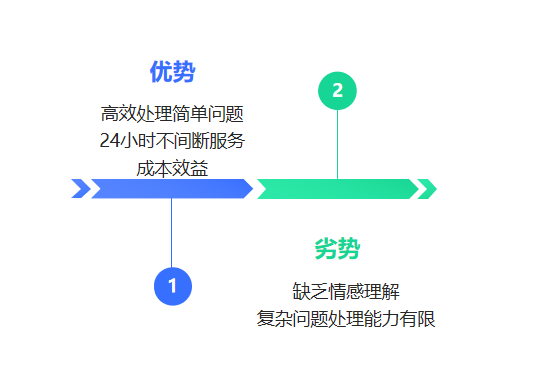
In the frontier of the rules game, AI is undoubtedly the winner. An online shopping platform only needs to preset the “keyword trigger” rule in the model-type reflective customer service, when the “return”, “bad reviews”, “complaints” and other signals appear. When signals such as “return”, “bad review”, “complaint” and so on appear, the system will be able to call the solution in seconds, and its response speed far exceeds the limit of human beings. For standardized scenarios – airline customer service to remind users “do not disclose identity card information”, the training institution robot real-time push schedule – this type of programmed services is precisely AI’s The main field of AI.
However, cold algorithms can’t get past the triple wall of emotion perception, fuzzy context and creative decision-making. The nightmare case of a clothing e-commerce company in Guangdong is very representative – when a customer shrunk his shirt in machine washing due to misuse, AI customer service could only retrieve the answer from the “return policy” thesaurus, and repeatedly suggested that the user “submit a return application”. “. The real solution (e.g., recommending a professional fabric restoration service) is lost in a sea of code.
second, the “survivor’s dilemma” of artificial customer service: the vulnerability and irreplaceability of emotional labor
In a large call center in Shenzhen, 34-year-old customer service supervisor Qiao Lei showed a shocking list of departures: of the 200 newcomers who joined the company in the first half of 2024, less than 23% were able to stick around for three months. “We need to play psychologist, negotiator, and product consultant all at the same time, but the hourly rate is only $5 more than the local minimum wage.” The workstations are permanently lined with lozenges and antidepressants, and the intensity of answering an average of 18 phone calls per hour makes this group the ultimate in “billable breath” workers.
Another set of data reveals another truth: in Guiyang City, “Migrant Workers Vocational Skills Training Program”, customer service training course graduates were seven enterprises on the spot signing, salary rose 15% year-on-year. “Artificial customer service is morphing from cheap labor to a value creator.” Professor Li Yuhui, a labor expert at Renmin University of China, analyzed that when AI contracted 80 percent of programmed consultations, the remaining 20 percent of complex scenarios instead highlighted three competitivenesses unique to humans: emotional empathy, fuzzy problem restructuring ability and crisis intervention ability.
The experience of Qingdao’s online taxi customer service agent Rong Kai confirms this shift. Late at night when receiving an emergency call about a physical conflict between a driver and a drunken passenger, the AI will only suggest “call the police” according to the rules, while the human customer service needs to complete the emotional appeasement, conflict mediation program design within five minutes, and synchronize the coordination of safety commissioners to intervene. Behind this dynamic decision-making chain is the unique cross-domain correlation ability of the human neuron network – which is exactly the most expensive training cost of the machine learning model.

Third, the human-machine dance of tomorrow’s picture: not a replacement, but evolution
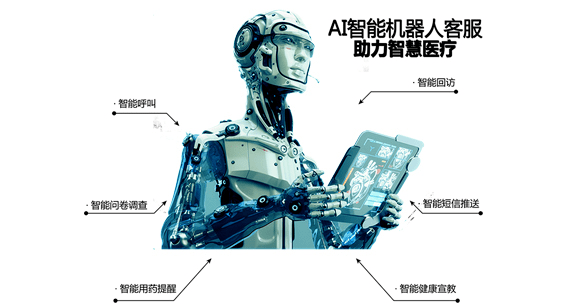
In the face of the collective anxiety of “difficult to turn artificial”, technological evolution has opened up a third way. The intelligent service system of a tertiary hospital in Beijing provides a model: when the AI predicts that the content of the consultation is beyond the scope of the knowledge base, it will automatically trigger the “intelligent auxiliary” mode – at the same time as the manual answer, the sidebar of the screen pops up in real time to deal with the record of similar cases, relevant drug contraindications tips, medical records, and other information. At the same time, the sidebar of the screen pops up real-time records of similar cases, tips on contraindications of relevant medicines, and key points on changes in medical insurance policies. This system enables a single person to handle an average of 38 cases per day to 65 cases of consultation, while patient satisfaction rose by 12 percentage points.
More striking is the transformation brought about by generative AI. Through Amazon Bedrock access to large language models, a bank credit card center to build a dynamic learning customer service system: the robot not only recognizes the user’s anxiety when he says, “I forgot the repayment date,” but also combines the historical data of the account to proactively provide “the minimum payment amount for this month” ($ 287.6), suggesting a weekly repayment. 287.6 yuan, it is recommended that the Tuesday before the customized program. However, the technical team always adhere to the red line: account security, legal disputes and other key decisions must be seamlessly switched to a manual seat.
four, written in the end: the end of the customer service revolution is not a machine, but a better service
When the classroom of a county vocational school in Hebei, 00 students are learning “how to use empathy to reduce customer aggressiveness”, when an AI trainer for the model labeled the 8700th “sarcasm (sarcastic tone)” corpus. This human-machine collaboration revolution has long since broken through the boundaries of traditional service scenarios.
Perhaps the future form of customer service will become invisible – like a smart home brand is testing the “anticipatory service”: by analyzing the user product usage data flow, AI in the rice cooker 48 hours before the failure of the active push maintenance tips, in the air-conditioning When the air conditioner filter reaches the replacement threshold, it will automatically book an engineer to come to the door. And for those moments when human intervention is required, there will always be a gentle voice on the other end of the phone saying, “Hello, I’m work number 2077, and I’m here to serve you.”
The ultimate proposition of technology has never been to replace humans, but to make us more focused on becoming ‘human’. This may explain why, in a world ruled by algorithms, artificial customer service has instead become a scarce resource that is being fought over – because the essence of service is always a story about people.
When AI customer service learns to "read minds", artificial customer service will disappear?
Late at eleven thirty at night, Lin Fang sighed heavily at the cell phone screen. Three days ago the online purchase of antihypertensive drugs have not yet been shipped, the order page " apply for a refund" button always pointing to the labyrinth of intelligent assistants. At the moment the sweet mechanical sound looped in the headset is like a well-designed digital cage: "Please state your needs, we will provide you with the best service… "
This searing scene is evolving into a collective dilemma of contemporary life. The latest data from the Ministry of Industry and Information Technology (MIIT) shows that in the third quarter of this year, only "poor customer service channels" accounted for 27% of Internet user complaints. But what is quite dramatic is that in the AI customer service blossomed in 2024, " customer service administrator " but appeared one after another in Shenzhen, Hangzhou, Chengdu and other 12 cities in short supply talent directory, Guangzhou, an e-commerce platform and even offered a monthly salary of 20,000 is still difficult to fill the job gap.

The evolution of intelligent customer service: from mechanical response to "rational affairs officer"
Walking into an AI lab in the Shenzhen Bay Science Park, a black server shaped like a space capsule is throughputting 50TB of data per second. Here hosts 100,000 AI customer service training models, their learning material is 320 million customer conversation records accumulated in the past three years. "Traditional intelligent customer service is like a repeater, now we want to cultivate a ‘digital housekeeper’ that can make decisions on its own. " The engineer pointed to the neural network mapping on the screen to explain.
This latest AI customer service, known as "utility-first", is breaking through the shackles of established procedures. When a user inquires about "flight rebooking", it can instantly call weather data, air traffic control information and passenger credit history to generate the best solution. An airline empirical test shows that the efficiency of this type of customer service to deal with complaints is 240% higher than manual, but satisfaction has increased by 18%.
The price of humanization: when the machine learns to empathize
In the customer service center of an e-commerce platform in Suzhou, 36-year-old Wang Xia is gazing at the "emotional dashboard" in front of her. The system transforms the user’s voice into a rippling emotional curve, with the redder color representing a higher anger value. "In the past, you needed to take three deep breaths to face a cranky customer, but now the AI can predict the emotional tipping point and automatically switch service strategies. " She showed a record of a call with ups and downs: when a user questioned about a delay in receiving a shipment, the AI customer service immediately initiated an emergency delivery plan by recognizing the keyword "heart medication" and transferred the conversation to a pharmaceutical consultant.
This technology, named "Progressive Interaction Experience", is rewriting the underlying logic of the customer service industry. A recent study by Beijing University of Posts and Telecommunications found that AI customer service equipped with an emotional computing module can reduce a user’s elevated blood pressure by 56 percent when dealing with complex disputes. But it also exposes a new paradox: when robots are better at soothing emotions than humans, are we domesticating a distorted form of empathy?
The digital labyrinth at night: the song of ice and fire in the customer service industry
At 2:00 a.m. in Chengdu Software Park, the 27-story customer service building is still brightly lit. In the workstation compartment, Li Mo is dealing with the 143rd customer consultation. His computer is connected to an AI assisted system, and the screen is not only popping with problem solutions, but also real-time updates of the stress index. "The system can predict which conversations will trigger trauma, but when it lights up red, I often have no way back. " This self-talk breaks down the existential dilemma of customer service people in the age of intelligence.
Behind the seemingly contradictory status quo is the deep game of technology and human nature. The human resources director of a logistics company revealed that although AI customer service undertakes 75% of routine inquiries, the remaining 25% of complex issues require more expensive labor input. What is more intriguing is that the customer service center using emotional computing technology, the employee turnover rate is instead 12% higher than the traditional model – not a reduction in work intensity, but a long period of time in a highly emotional labor state.

Breaking time: a new ecology of human-machine symbiosis
In an office building on the Bund in Shanghai, Zhang Tao, an engineer of the Dify platform, demonstrated their latest solution: nesting "emotional buffers" in customer service conversations. When the user is unable to communicate effectively with the AI for three consecutive times, the system will automatically trigger the "empathy enhancement mode", not simply transferring to manual labor, but starting the scene reconstruction algorithm. "This is like putting shock absorbers on the conversation, the AI is learning and imitating human patience in solving problems. "
This "human-machine relay" model is creating a new balance of value. A pilot project in a bank showed that users whose AI processing of basic business took up to 8 minutes, the communication efficiency after transferring to a human instead increased by 40%. The secret is that the system will be pre-completed identity verification, claims categorization and other "invisible services", so that artificial customer service focus on the need for creativity.

Standing in front of the big data screen in the smart city command center, those flickering connecting lines outline not only the trajectory of the technology iteration, but also the subtle reconfiguration of human-machine relations. When the clock strikes midnight, the new generation of customer service system is completing its 10 millionth learning: not to replace human beings, but to understand the true meaning of service – in the rational and emotional intertwining of the zone, there is always a need to retain the human nature of the temperature of the window. Just as the best pianist knows the right time to stop the time value, the most brilliant service may lie in knowing when to let the light of human nature to illuminate the digital fog.